Veterinary Real Estate Investing: A Growing Healthcare CRE Niche

June 1, 2026

Share


-2.png)
Cap rates on stabilized retail keep compressing while veterinary real estate still trades above 6.5 percent, and the investors who noticed first are already three deals deep. Pet healthcare spending has more than doubled over the past decade, yet the properties behind that growth remain priced like an afterthought across most commercial real estate (CRE) portfolios.
Private equity has poured more than $45 billion into veterinary consolidation since 2017, tightening the supply of quality assets before institutional capital fully enters the market. The operators building positions now are securing a lease structure; the rest of the market has not priced correctly yet.
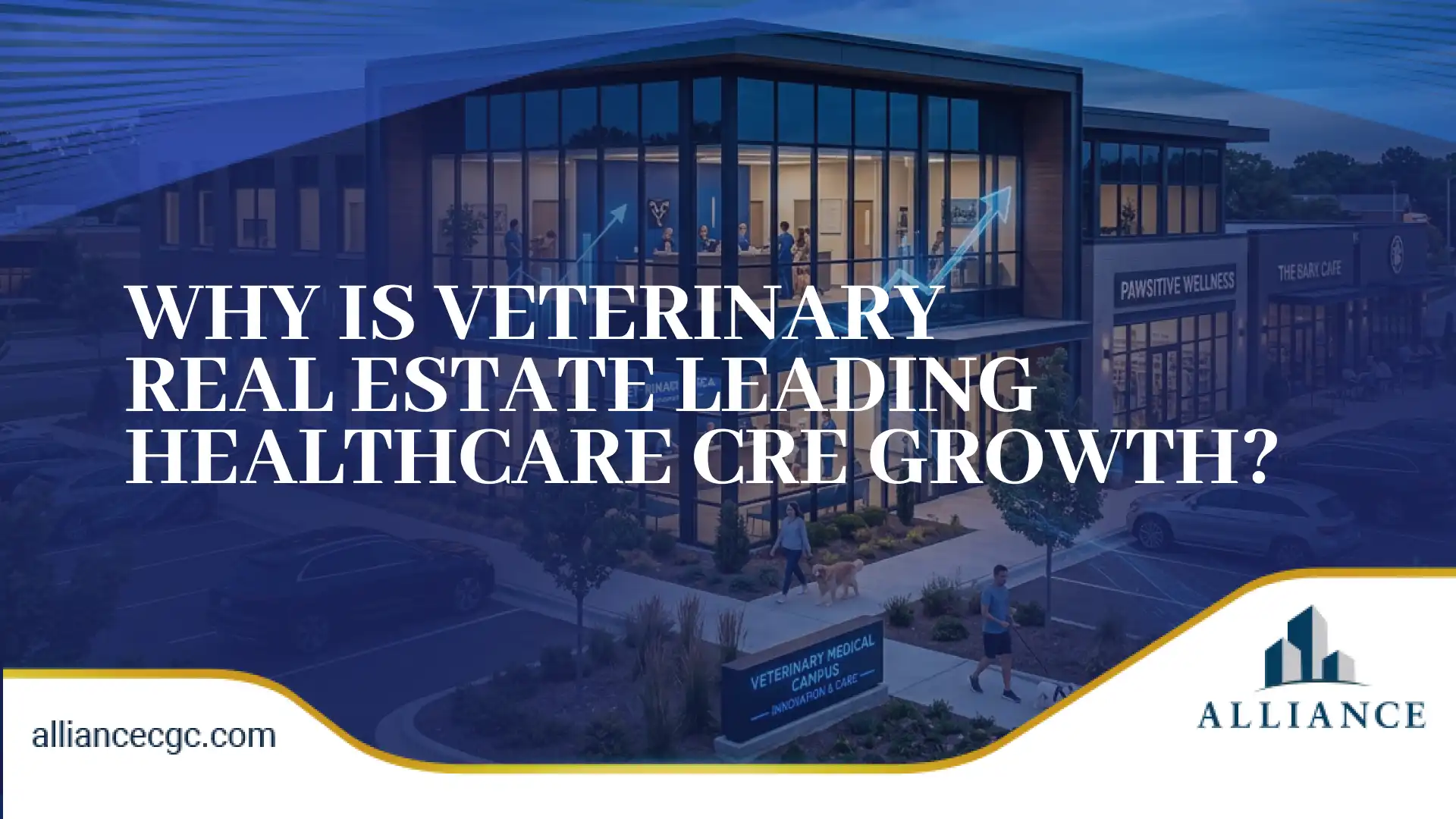
Why Is Veterinary Real Estate Leading Healthcare CRE Growth?
Pet Ownership and Spending Keep Climbing
Seventy-one percent of United States households now own a pet, or roughly 94 million homes, according to APPA's National Pet Owners Survey. That base translates directly into clinic visits, and clinic visits translate into rent coverage landlords can underwrite with confidence.
Spending growth has matched the ownership curve. Veterinary services spending has more than doubled over the past decade, pushing the broader pet care market toward $236 billion by 2030 at a 7 percent compound annual growth rate. Tenants generating that kind of top-line growth do not walk away from a location lightly.
Veterinary Tenants Are Recession-Resistant
Recession resistance is not a marketing claim in this asset class. It shows up in the data:
- Clinics stayed open as essential businesses through the pandemic shutdown while comparable retail closed.
- Pet owners prioritize veterinary spending even during income disruption, supporting lower default rates on rent.
- In-person treatment cannot migrate to e-commerce, removing a risk that has reshaped traditional retail underwriting.
That combination keeps rent coverage stable when other tenant categories are renegotiating terms.
Private Equity Consolidation Reshapes the Sector
Private equity has deployed more than $45 billion into veterinary platform consolidation since 2017, with more than 20 active private equity-backed groups still expanding. Each acquisition tightens the pool of independently owned clinics available within this asset class for sale-leaseback structures.
CoStar tracked $850 million in sales volume for this asset class between February 2022 and February 2024 alone. Investors entering now are competing for inventory against buyers who already understand what these leases are worth.
What Makes a Strong Veterinary Clinic Lease Structure?
Lease structure decides more of a veterinary real estate return than the building itself. A triple-net lease (NNN) with a corporate-backed tenant and built-in escalations behaves nothing like a gross lease with an independent operator on a short term, even on the same block.
The terms that separate a durable cash flow asset from a renegotiation risk are specific and repeatable across this asset class:
These terms compound. A 10-year NNN lease with a corporate guarantee and built-in escalations prices at a meaningfully lower cap rate than a comparable building with a gross lease and an independent tenant because the income is more certain.
Reading that distinction correctly is where a veterinary real estate broker earns the fee since lease language that looks standard on the surface can shift who absorbs a roof replacement five years into the hold.
How Do Investors Evaluate Veterinary Real Estate Opportunities?

1. Review Tenant Credit and Operator Strength
An independent single-location clinic and a corporate platform tenant carry entirely different risk profiles, even when both sign the same lease term. Corporate guarantees and multi-unit operators reduce the odds that a vacancy event interrupts cash flow midhold.
Underwriting the operator, not just the real estate, is what separates a defensible position in this asset class from a speculative one.
2. Read Demographic and Competition Data
Population density, median income and pet ownership rates set the ceiling on how much a clinic can charge and how reliably it fills its schedule. A market with rising rooftops and limited existing supply outperforms a saturated corridor regardless of building quality.
Competition density matters as much as demand density. Two clinics chasing the same 10,000 households produce a different outcome than one clinic serving that population alone.
3. Check Site Visibility and Accessibility
Visibility and access carry more weight for veterinary tenants than for typical retail since emergency and specialty visits depend on a client finding the location quickly. Parking capacity becomes a binding constraint for clinics running surgical and walk-in volume on the same day.
A site tucked behind a shopping center with limited signage will underperform a comparable building on a primary corridor, even with an identical lease.
4. Confirm Building Condition and Build-Outs
Specialized build-outs, surgical suites, imaging rooms and reinforced HVAC systems represent capital a tenant will not walk away from lightly, but they also raise the cost of retenanting if the lease ever breaks. Investors weigh that trade-off differently depending on hold period.
Older buildings with sound structure still perform well in this asset class, since the value sits in the lease and the build-out investment, not strictly in building age.
5. Stress-Test Cap Rate and Residual Value
Cap rate alone does not confirm that a veterinary real estate deal is priced correctly. Residual value modeling, what the asset is worth at exit after lease rollover risk and market repricing, carries more weight than the entry yield.
Conservative terminal cap rate assumptions protect the downside when financing costs shift, which is exactly the discipline this asset class rewards over a full hold period.
Veterinary clinic valuation rests on three factors that price together, not in isolation:
None of these three factors price an asset in isolation. A specialist broker in this niche reads them together since a strong lease on a weak site, or a great location with a thin lease, both undervalue the same building for different reasons.
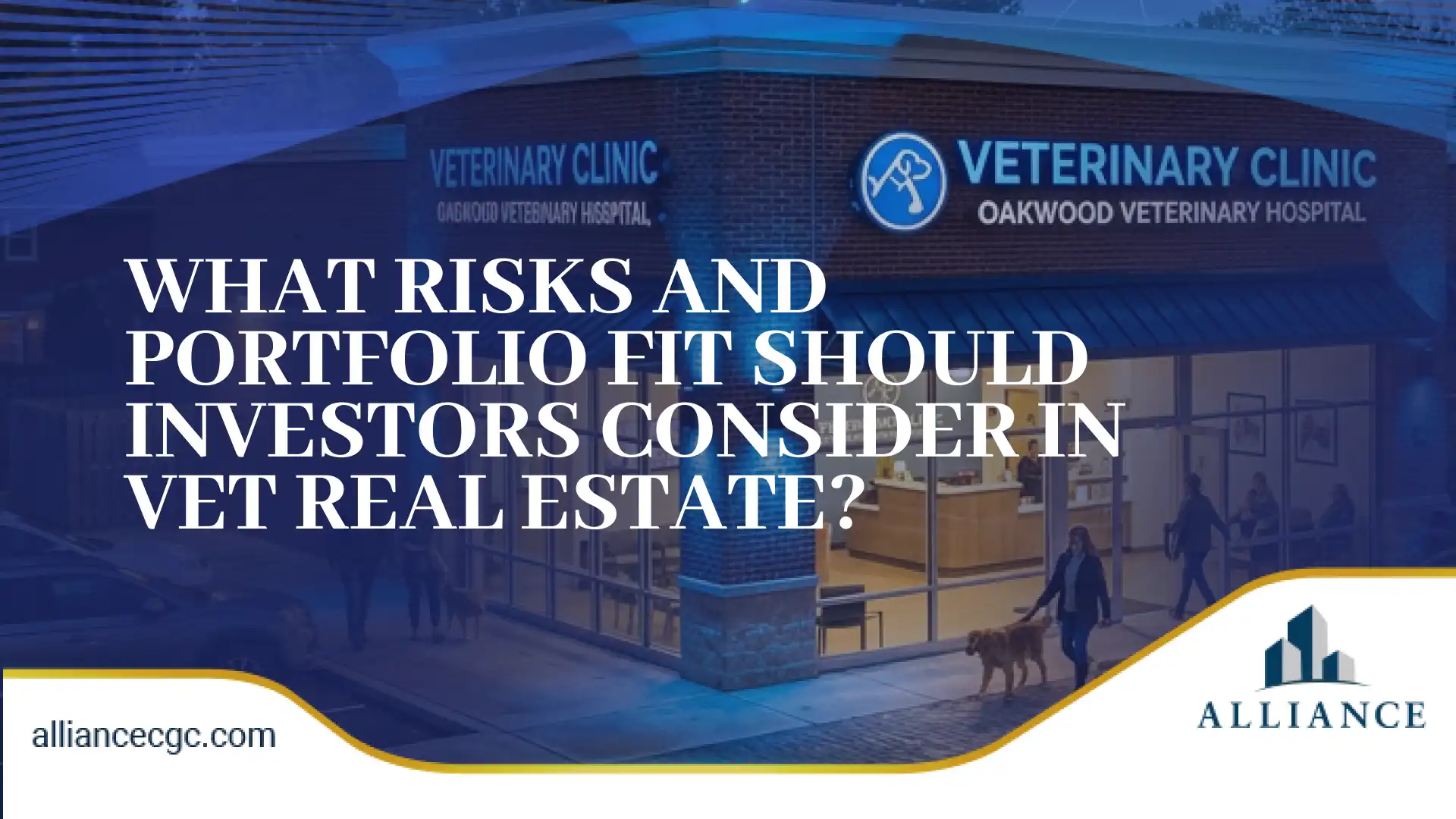
What Risks and Portfolio Fit Should Investors Consider in Vet Real Estate?
Every advantage in this asset class carries an offsetting risk that disciplined underwriting has to price in directly:
- Tenant concentration in single-tenant assets ties the entire return to one operator's performance, so a vacancy event removes cash flow until retenanting completes.
- Specialized build-outs that keep tenants in place also raise retenanting costs if a lease does break, since the next operator needs compatible surgical and treatment infrastructure.
- Regional liquidity varies sharply by market, and buyer pools thin out fastest in states with less favorable landlord-tenant law or weaker population growth.
None of these risks disqualify the asset class. They define which markets and tenant profiles deserve a closer look before capital moves.
This asset class performs best as a complement to other necessity-based holdings, not as a stand-alone allocation. Pairing it with medical office or NNN retail spreads tenant-specific risk across a portfolio while keeping the defensive characteristics intact.
That positioning is consistent with how disciplined capital approaches healthcare real estate broadly: durable demand first, yield second.
Grow Your Portfolio With Veterinary Real Estate Today

Veterinary real estate is the next logical allocation of capital for those who value durable demand over headline yield, and investors already committed to healthcare-focused portfolios are positioned to move first.
Alliance approaches this asset class the same way we approach every healthcare-adjacent acquisition: as shared market exposure built on tenant strength and disciplined underwriting, not a transaction to close and move past.
If this allocation fits where your portfolio is headed, let's connect and build from there.
Frequently Asked Questions (FAQs)
What is veterinary real estate?
Veterinary real estate refers to properties leased to animal hospitals, specialty clinics and veterinary practices, typically built out with exam rooms, surgical suites and diagnostic infrastructure. The asset class sits between healthcare and retail, combining nondiscretionary demand with neighborhood-level visibility requirements. For investors, that combination produces tenant retention numbers that traditional retail rarely matches, which is the real reason this niche keeps attracting capital that used to default to net lease retail.
Is vet real estate a good investment?
Vet real estate has delivered average cap rates near 6.9 percent, with sales volume topping $850 million between 2022 and 2024 alone, according to CoStar. Demand held through the pandemic and every rate cycle since because pet healthcare spending is treated as nondiscretionary by most households. The deals worth chasing are the ones backed by long-term leases and operators with multi-unit staying power, not the ones with the highest headline yield.
What cap rate is typical for veterinary clinics?
These properties typically trade between 6.5 percent and 7 percent, depending on lease term, tenant credit and remaining years on a triple-net structure. Corporate-backed tenants with 10-plus years remaining compress toward the lower end of that range, while independent operators on shorter terms push pricing higher. That spread is where underwriting discipline separates a fairly priced deal from one that only looks attractive on a rent roll.
How do I find a veterinary real estate broker?
A veterinary real estate broker who specializes in this niche understands lease language specific to surgical build-outs, NNN responsibility splits and operator credit that a generalist retail broker will miss. Look for transaction history in this exact asset class, not adjacent medical office deals. The right broker shortens diligence and catches the lease terms that move pricing before an offer goes out.
What is veterinary clinic valuation based on?
Veterinary clinic valuation comes down to three layers that price together: The physical property and its build-outs, the lease agreement and its guarantees and the location's demographic depth. No single factor carries the deal on its own. An investor who prices only the cap rate without weighing all three is paying for income that may not hold through the next lease renewal.


