5 Recession-Proof Medical Tenants To Watch in 2025

October 20, 2025

Share


-2.png)
The investment landscape in 2025 is evolving, not unraveling. Rising interest rates, tighter lending conditions and shifting demand across traditional sectors, including office, retail and multifamily, have created a more selective market. Yet, as many asset classes work to regain balance, a powerful constant remains: Healthcare demand never wavers.
National office vacancies are projected to stabilize near 19%. In comparison, retail absorption is expected to moderate by roughly 30% year over year, a sign of recalibration rather than retreat, according to CBRE’s U.S. Real Estate Market Outlook 2025. Meanwhile, healthcare spending is set to reach $6.8 trillion by 2030, driven by an aging population and the shift toward outpatient services, per the Centers for Medicare & Medicaid Services.
For discerning investors, that growth translates into opportunity. Medical office real estate anchored by essential-service tenants, such as urgent care centers, dialysis clinics and diagnostic providers, remains one of the most resilient and strategically defensive asset classes available today. These properties are often secured by long-term, triple-net (NNN) leases, providing insurance-backed income and steady occupancy regardless of market cycles.
For investors who recognize that absolute stability comes from essential demand, 2025 offers a rare chance to strengthen portfolios with assets built to perform in any cycle. Among healthcare operators, a select group continues to deliver consistent growth and dependable returns, the kind of tenants that define what it means to be truly recession-proof.
Urgent Care Operators
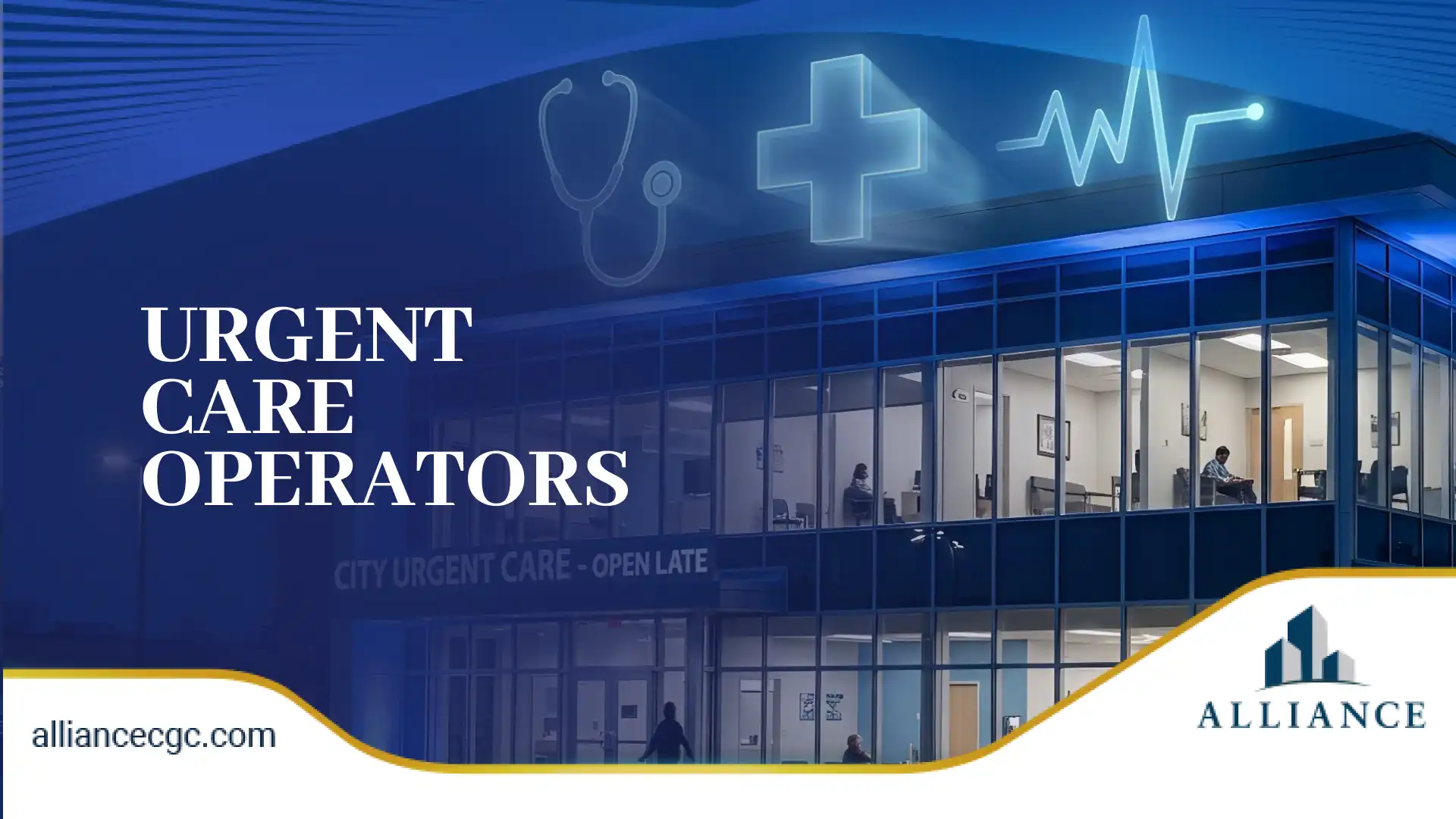
Urgent care has become the front line of modern outpatient care, bridging the gap between primary care physicians and hospital emergency departments. Operators like MedExpress, NextCare and FastMed continue to expand because they meet nondiscretionary, insurance-reimbursed medical demand that persists across market conditions.
For investors, this translates to recession-resistant performance backed by predictable patient volume and consistent reimbursement streams. Most urgent care properties are secured under corporate-backed triple-net (NNN) leases of 10–15 years, typically with 2%–3% annual rent escalations.
These assets deliver steady cash flow, limited operational exposure and high tenant retention, exactly the characteristics that strengthen medical office real estate portfolios focused on long-term value and downside protection. In a selective market, urgent care operators stand out as reliable income generators and essential tenants that reinforce portfolio stability.
Dialysis Centers

Dialysis facilities remain one of the most dependable income generators in medical real estate. Operators like DaVita and Fresenius Medical Care deliver life-sustaining treatments several times a week, essential care that patients can’t postpone. That level of necessity creates consistent patient flow and reliable rental performance across every market cycle:
- Non-discretionary demand keeps revenues steady and occupancy high, even in downturns.
- Insurance-backed reimbursements through Medicare and private coverage protect cash flow.
- 15- to 20-year corporate-backed triple-net (NNN leases provide built-in rent escalations and minimal management.
- Specialized buildouts make relocation costly, reinforcing long-term tenant commitment.
For investors, dialysis centers offer a rare blend of predictable returns, strong credit tenancy and mission-critical use. They’ve become foundational assets for recession-resilient medical office portfolios built on stability rather than speculation.
Dental & Orthodontic Groups

Dental and orthodontic practices have quietly become some of the most reliable performers in the medical real estate sector. Brands like Aspen Dental and Heartland Dental continue to expand nationwide, supported by private equity funding and scalable service models that meet essential, recurring healthcare needs.
Routine dental care, from cleanings to orthodontics, isn’t optional for most families. Patients return every six months, creating built-in repeat demand and predictable tenant revenue that remains stable even during market slowdowns:
- Recurring patient visits drive consistent cash flow and low volatility.
- Corporate-backed leases enhance credit quality and reduce default risk.
- High tenant investment in specialized buildouts increases the likelihood of renewal.
- 2,500- to 4,000-square-foot footprints fit efficiently into medical or retail centers, maximizing site adaptability.
For you, as an investor, dental assets combine recession-resistant demand with long-term occupancy stability, delivering dependable performance that strengthens diversified medical office portfolios.
Imaging & Diagnostic Centers

Imaging and diagnostic centers have become essential infrastructure in today’s healthcare ecosystem. Operators like RadNet and SimonMed are expanding rapidly as hospitals shift more imaging services to outpatient settings for efficiency and accessibility. This shift is reshaping medical real estate investing, opening consistent opportunities for investors focused on stability and innovation.
Diagnostic imaging isn’t elective; it’s central to preventive, surgical and emergency care. That necessity, combined with substantial insurance reimbursement, keeps patient demand steady in every economic climate:
- High capital investment in MRI and CT technology makes relocation costly, locking in long-term tenants.
- Outpatient growth drives rising lease demand in suburban and medical office locations.
- Corporate-backed NNN leases (often 10–20 years) provide predictable rent escalations and dependable income.
For investors, imaging assets represent the intersection of healthcare necessity and technological advancement. They deliver stable cash flow, long-term relevance and exposure to a sector where innovation continues to expand patient access, qualities that strengthen any recession-resilient medical office portfolio.
Veterinary & Pet Healthcare

The veterinary sector has quietly become one of the most resilient performers in the medical real estate sector. Operators like Banfield Pet Hospital, BluePearl and VCA Animal Hospitals continue to expand as pet ownership and spending on pet health rise across every income level.
What makes this segment stand out is its consistency. For most families, pet care isn’t discretionary; it’s essential. Even during economic slowdowns, veterinary visits remain steady, driving recurring revenue and long-term tenant stability:
- Essential demand: Pet care spending in the United States surpassed $136 billion in 2023 (American Pet Products Association) and continues to grow year over year.
- Corporate consolidation: Many leading veterinary chains operate as subsidiaries of Fortune 500 healthcare or consumer companies, enhancing credit quality.
- Strong real estate fundamentals: Clinics typically lease free-standing or retail-adjacent buildings under triple-net (NNN) leases, securing stable income and minimal management.
For investors, veterinary assets offer a potent mix of diversification and defensive characteristics. They offer predictable cash flow, credit-backed leases and a tenant base supported by one of the most emotionally anchored industries in healthcare. In an era defined by selectivity, these properties bring both stability and growth potential to recession-resilient medical office portfolios.
Why Healthcare Tenants Strengthen Real Estate Portfolios?

Across every economic cycle, healthcare operations maintain uninterrupted demand, ensuring consistent asset performance and occupancy. Unlike cyclical sectors dependent on consumer discretion, medical office properties generate durable rent collections supported by insurance reimbursements and predictable patient utilization rates:
- Contracted revenue streams from public and private payers stabilize cash flow, even amid capital market volatility.
- Institutional-grade triple-net (NNN) leases transfer expense risk to tenants, preserving investor margins and reducing operational exposure.
- Minimal turnover risk: Medical tenants invest heavily in clinical buildouts, anchoring them to locations for decades.
- Demographic acceleration: Aging populations, chronic disease prevalence and outpatient migration continue to expand the healthcare real estate footprint.
These structural fundamentals create consistent yield, defensive returns and long-term asset value appreciation. Healthcare tenancy is not driven by sentiment; it’s underpinned by nondiscretionary utilization and credit-backed lease structures, making it one of the most reliable components of diversified commercial real estate (CRE) portfolios.
Where Steady Demand Meets Smart Investing
Essential-service real estate continues to outperform in every cycle. Healthcare, veterinary and medical office properties generate insurance-backed revenue, credit-secured leases and consistent tenant retention, which are the fundamentals that preserve capital and compound value over time.
Alliance applies this same disciplined investment philosophy across its portfolio of medical, retail, industrial and veterinary assets, delivering a 28% historical internal rate of return (IRR), a 2.5× average equity multiple and more than $500 million in managed assets. With a focus on creditworthy tenants and mission-critical locations, our strategy transforms necessity into opportunity, producing predictable, risk-adjusted performance through all market conditions.
Connect with the Alliance to explore how recession-resilient, essential-service real estate can strengthen your portfolio with stability, yield and lasting value.
Frequently Asked Questions (FAQs)
How do you invest in medical office buildings?
Investing in medical office buildings begins by identifying income-producing assets leased to essential healthcare providers, such as urgent care, dialysis or dental providers. These facilities often operate under long-term NNN leases, offering insurance-backed, predictable income and minimal landlord obligations. Investors can access opportunities directly or through private real estate offerings specializing in essential-service assets. In a selective market, allocating capital to recession-resilient healthcare properties provides both downside protection and compounding income potential, making it a cornerstone of modern portfolio strategy.
What classifies property as medical office real estate?
A property is classified as medical office real estate when it’s purpose-built or retrofitted for licensed healthcare providers delivering outpatient or specialty care. These assets include urgent care centers, imaging facilities, dental offices and specialty clinics, all of which offer nondiscretionary medical services. Most feature corporate-backed NNN leases and significant tenant buildouts, creating long-term occupancy and institutional-grade stability. For investors, medical office properties represent a defensive real estate asset class driven by demographic trends, healthcare utilization and essential-service demand, consistently outperforming broader commercial sectors.
What is a triple-net lease (NNN)?
A triple-net lease (NNN) is a commercial lease structure in which tenants pay property taxes, insurance and maintenance in addition to base rent. This model transfers operational expenses away from investors, creating predictable, low-management income streams. In the medical office sector, NNN leases are standard because healthcare tenants value long-term stability and operational control of their facilities. For investors, NNN properties offer steady cash flow, built-in rent escalations and reduced volatility, making them a perfect fit for recession-resilient real estate strategies.
What is an accredited real estate investor?
An accredited real estate investor is an individual or entity that meets the U.S. Securities and Exchange Commission's (SEC’s) financial qualification thresholds, enabling participation in private placement investments not available to the general public. Typically, this includes individuals with a net worth exceeding $1 million (excluding primary residence) or annual income above $200,000 ($300,000 jointly) for the last two years. Accredited investors gain access to institutional-grade healthcare and medical office opportunities offering risk-adjusted returns, long-term leases and stable income growth. This investor class plays a pivotal role in private market real estate, channeling capital into mission-critical, recession-resilient assets that generate consistent value across market cycles.


