Types of Commercial Real Estate Investments for Investors

December 29, 2025

Share


-2.png)
Asset selection is one of the most important decisions you make in commercial real estate investing because it directly influences income reliability, risk exposure and long-term portfolio performance. Not all commercial real estate investments behave the same when market conditions shift, and treating asset types as interchangeable often leads to uneven results.
Many investors encounter this challenge as portfolios grow. Income may look stable on the surface, but exposure to tenant concentration, operating costs or economic sensitivity can increase risk over time. This is where understanding how different types of commercial real estate respond to financial pressure becomes essential.
Experienced investors evaluate commercial real estate investments by focusing on how income is generated, how durable tenant demand is and whether each asset plays an essential role in its market. These fundamentals shape how assets perform across cycles and determine whether income remains consistent when conditions change.
Why Asset Type Selection Matters in Commercial Real Estate Investing

Asset type selection plays a defining role in cash flow stability, operational complexity and downside risk within commercial real estate investing. Different property types respond differently to tenant behavior, economic pressures and market cycles, so income reliability is shaped as much by asset selection as by execution.
As you allocate capital, the distinction between essential-use assets and discretionary-driven properties becomes increasingly essential. Assets supported by healthcare, logistics and service-based demand tend to sustain occupancy and income more consistently than those tied to short-term consumer behavior.
Experienced commercial real estate investors allocate selectively by evaluating asset durability, tenant use and long-term relevance within the local economy. This disciplined approach helps ensure portfolio decisions are driven by fundamentals rather than popularity or short-term performance trends.
Medical Office Buildings
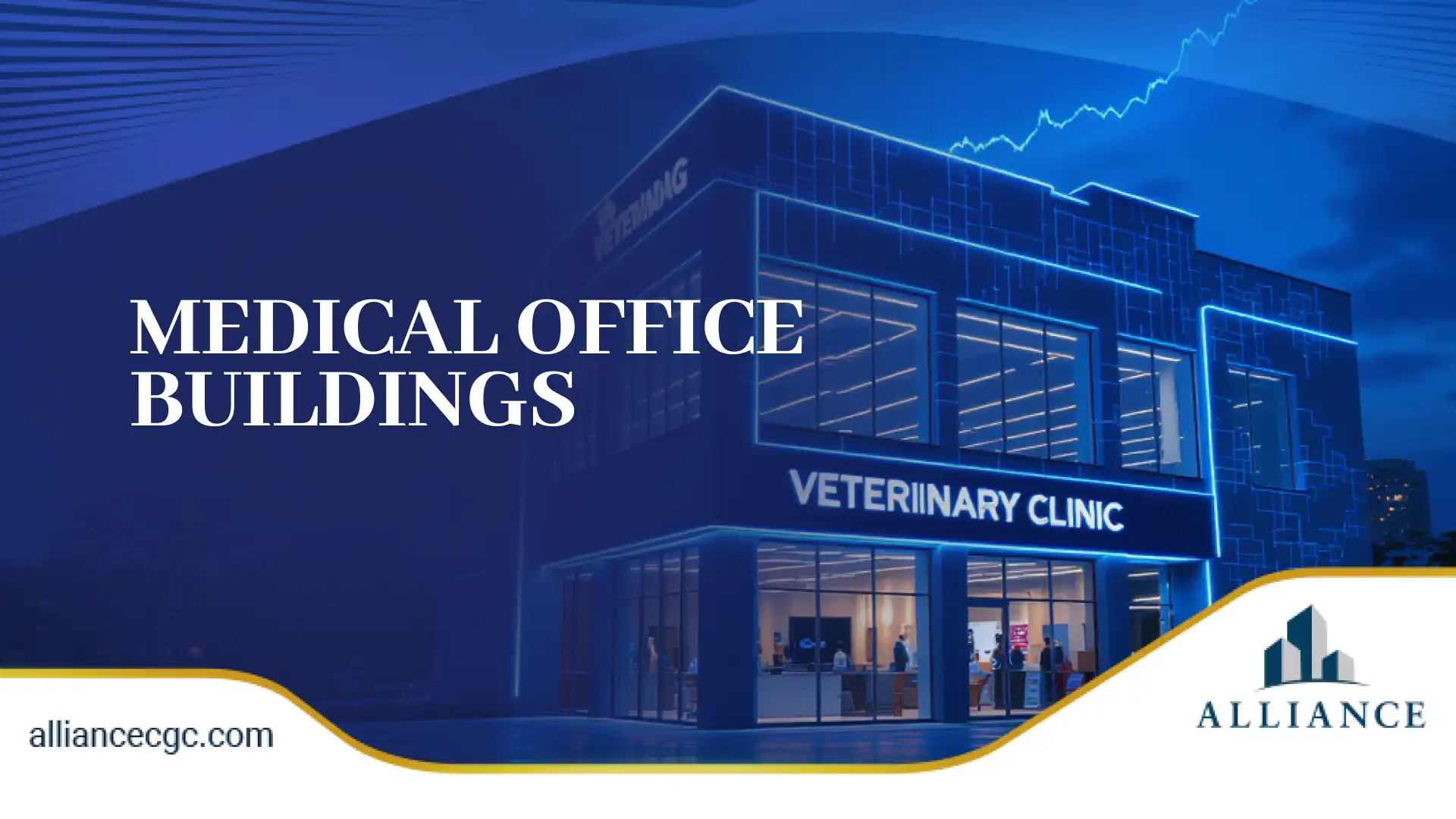
Medical office buildings play a distinct role in commercial real estate investing because tenant demand is driven by healthcare delivery rather than discretionary spending. Patient needs, demographic trends and ongoing demand for medical services in local communities support occupancy.
When you evaluate medical office real estate investment opportunities, the focus typically centers on tenant specialty, lease duration, proximity to healthcare systems and market demographics. These assets are commonly viewed as essential-use properties, with income characteristics designed to remain stable as market conditions change.
Industrial Real Estate

Industrial real estate supports logistics, distribution and supply chain infrastructure that enables goods to move efficiently across regions. Demand for these properties is driven by operational necessity rather than consumer behavior, resulting in an income profile different from that of retail or office assets.
In commercial real estate investment, industrial properties are evaluated based on location access, tenant operations, lease structure and functional utility. Income reliability depends on how well the asset supports long-term logistics requirements and whether it remains relevant within evolving distribution networks.
Retail Real Estate

Retail real estate performance varies widely depending on tenant mix, service orientation and location quality. Properties anchored by necessity-based or service-driven tenants tend to exhibit more consistent demand than those reliant on discretionary consumer spending.
As you assess retail commercial real estate investments, focus on tenant relevance, service dependency and local market support. Institutional investors often favor retail assets where tenants provide goods or services that are part of everyday consumer behavior rather than optional purchases.
Office Real Estate

Office real estate encompasses a broad range of tenant uses and operating models, making selectivity essential. Performance is closely tied to tenant credit quality, lease duration, employment patterns and local economic conditions.
In commercial real estate investing, office assets require careful analysis of how space is used, how tenants generate revenue and whether durable economic drivers support demand. Not all office properties offer the same level of income stability and asset quality plays a significant role in long-term performance.
Multifamily Real Estate

Multifamily real estate provides residential rental housing and generates income through recurring lease payments. While housing demand tends to remain steady, these assets are sensitive to operating costs, local supply conditions and regulatory environments.
When you evaluate multifamily commercial real estate investments, attention shifts to expense management, tenant turnover, market rent dynamics and operational oversight. Active management is central to maintaining income consistency and controlling risk over time.
How Institutional Investors Allocate Across Commercial Real Estate Asset Types

Institutional investors allocate capital with intention rather than symmetry. Decisions are guided by how each asset type contributes to income stability, risk management and long-term portfolio balance rather than short-term market trends.
As you build a commercial real estate portfolio, allocation typically reflects several core considerations:
- Income reliability, based on how consistently an asset produces cash flow across market cycles
- Asset durability, reflecting whether demand for the property’s use remains relevant over time
- Tenant demand, including the essential nature of services provided, and tenant financial strength
- Portfolio balance, ensuring no single asset type or market dominates overall performance.
This structured allocation approach helps ensure capital is aligned with the long-term strategy and supports disciplined portfolio construction, allowing investment decisions to remain grounded as market conditions change.
Balancing Risk and Income Across Asset Types
Every commercial real estate investment carries a different relationship between income stability, and operational risk, and understanding that balance is central to disciplined portfolio construction. Assets tied to essential services often provide more predictable cash flow, while other property types may require greater oversight or be more sensitive to economic shifts.
When you evaluate asset types through a risk-adjusted lens, the goal is not to eliminate risk but to position it intentionally within the portfolio. By combining assets with different income behaviors and risk profiles, you can maintain income consistency while managing exposure as market conditions evolve.
This approach allows commercial real estate portfolios to remain resilient without relying on a single asset type or market environment.
How Asset Type Selection Supports a Long-Term Investment Strategy

Understanding the different types of commercial real estate investments is central to disciplined portfolio construction. Asset selection influences how income is produced, how risk is distributed and how portfolios perform across market cycles.
When you approach commercial real estate investing with a long-term perspective, asset types serve specific strategic functions within the portfolio:
- Income stability, by combining assets with different cash flow characteristics
- Inflation sensitivity, based on how leases and operating structures respond to cost changes
- Interest rate exposure, influenced by asset durability and financing flexibility
- Economic resilience, shaped by whether tenant demand is tied to essential services or discretionary activity
Viewing asset types through this strategic lens helps commercial real estate portfolios stay aligned with durability, risk management and long-term performance goals rather than short-term opportunities.
Disciplined Asset Selection Builds Durable Portfolios
Commercial real estate investing rewards investors who understand how different asset types perform under real operating conditions rather than ideal market assumptions. When you focus on income durability, tenant demand and long-term asset relevance, asset selection becomes a disciplined process that supports consistent portfolio performance across market cycles.
This is the same approach behind Alliance’s growth to a $500M-plus portfolio, supported by 30-plus years of experience, a 28% historical internal rate of return (IRR) and 2.5x equity multiples paid to investors. These results reflect a long-term investment philosophy grounded in essential demand, risk awareness and disciplined execution.
Strengthen your portfolio with a commercial real estate strategy built to endure through changing market conditions. Invest with Alliance.
Frequently Asked Questions (FAQs)
What type of property is commercial real estate?
Commercial real estate includes income-producing properties used for business operations or essential services rather than personal residences. Common types of commercial real estate investments include medical office buildings, industrial facilities, retail properties, office buildings and multifamily housing. These properties are evaluated based on tenant demand, lease durability and long-term economic relevance. This framework reflects how experienced operators assess commercial real estate investments through income reliability and asset purpose.
How does commercial real estate investing work?
Commercial real estate investing works by acquiring properties that generate recurring income through structured tenant leases and ongoing operations. Cash flow is driven by lease terms, tenant quality and expense control rather than short-term market pricing. Investors evaluate commercial real estate investments by analyzing net operating income and performance across market cycles. This disciplined approach emphasizes durability and consistency over speculation.
How to build a commercial real estate portfolio?
Building a commercial real estate portfolio starts with understanding how different asset types contribute to income stability and risk distribution. You diversify across property types, geographic markets and tenant demand to avoid concentration risk. A well-constructed commercial real estate portfolio combines assets with different income behaviors and economic sensitivity. This portfolio-level discipline supports long-term performance across changing market conditions.
How to invest in industrial real estate?
Industrial real estate investment focuses on properties that support logistics, warehousing and supply chain infrastructure. These assets are evaluated based on location access, tenant operations, lease structure and long-term functional utility. Demand is driven by operational necessity rather than consumer behavior, which supports income durability. In commercial real estate investing, industrial assets often serve as a stabilizing force in diversified portfolios.


